
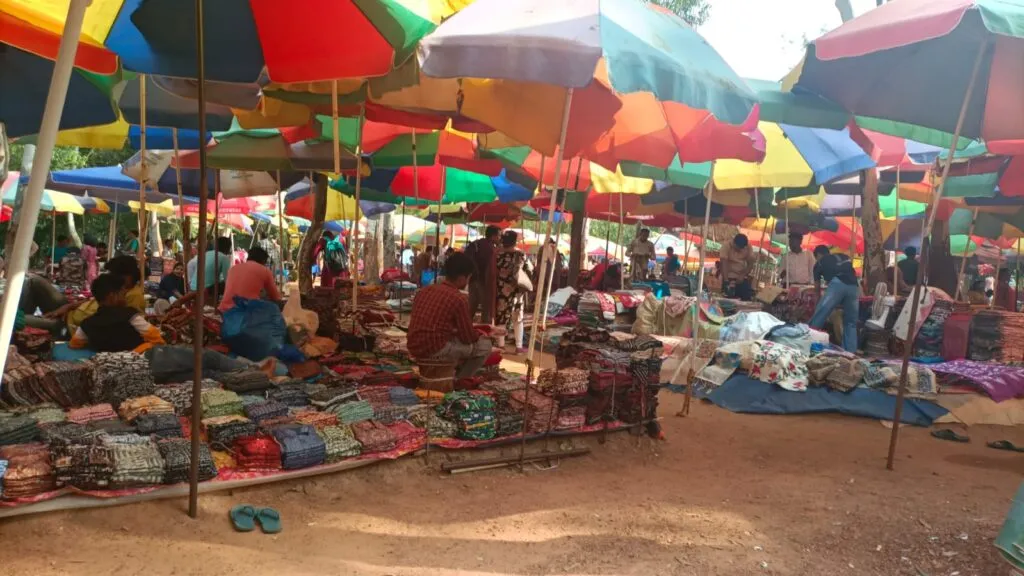
Situated along the undulating red-laterite canyons of Bolpur, Khowai Sanibarer Haat Santiniketan is a celebrated open-air village market. Held exclusively on Saturday afternoons, this iconic weekly fair gathers rural artisans, folk singers, and travelers under the open sky. Many visitors informally refer to this gathering as Sonajhuri Haat Santiniketan because it borders the acacia forest edge. However, the true geographical heart of the fair unfolds directly inside the soil-eroded ravines of the historic Khowai basin.
First, natural water run-offs and monsoon rains sculpted these picturesque red-soil ravines over centuries. Consequently, the setting feels organic and completely distinct from conventional town bazaars. Decades ago, local Santhal craftspeople began gathering here on Saturdays to trade seasonal produce and handmade earthenware. Today, village women lay handwoven grass mats directly on the crimson dirt slopes, creating a warm, unhurried cultural platform.
Below, explore our complete guide covering market timings, handmade crafts, Baul music circles, transport routes, and nearby attractions.

Khowai Sanibarer Haat: Essential Information
| Feature | Visitor Details |
|---|---|
| Official Name | Khowai Sanibarer Haat (খোয়াই শনিবারের হাট) |
| Location | Khowai Canyon Basin, Ballavpur Danga, Bolpur Santiniketan 731235 |
| Weekly Schedule | Every Saturday only (Full traditional gathering occurs once a week) |
| Operating Timings | 2:00 PM to sunset (Peak activity between 3:30 PM and 5:30 PM) |
| Entry Fee | Free public entry (Open natural landscape) |
| Distance from Prantik Station | Approx. 4.5 km (about 12 to 15 minutes by toto) |
| Distance from Bolpur Station | Approx. 6.5 km (about 18 to 22 minutes by toto) |
| Nearest Landmarks | Prakriti Bhavan Nature Art Museum, Ballavpur Deer Park & Sriniketan |
Live Baul Music & Santhal Folk Traditions
Music provides the genuine heartbeat of this Saturday canyon gathering:
- Baul Melodies Under the Trees: First, wandering Baul singers dressed in saffron robes sit under shady branches with their ektara, dotara, and dugi. Visitors often sit in open circles on the red earth to listen to mystic songs.
- Natural Canyon Acoustics: In addition, the natural bowl of the eroded ravines amplifies the raw, earthy sound of live vocal performances.
- Santhal Tribal Dances: Finally, local Santhal dance troupes perform graceful circular dances to the deep pulse of traditional madal drums.
Handmade Village Crafts Sold on the Red Earth
Because craftspeople sell their work directly without middlemen, visitors purchase genuine regional art at fair prices:
- Kantha Embroidery: First, rural women display hand-stitched stoles, dupattas, and tussar sarees decorated with folk motifs.
- Santiniketan Leatherwork: Second, local artisans sell handcrafted handbags, coin purses, and wallets embossed with classic tribal patterns.
- Terracotta & Clay Ornaments: Third, potters offer fired-clay earrings, rustic necklaces, and decorative home pieces shaped from local soil.
- Dokra Metal Sculptures: Finally, indigenous smiths bring lost-wax bell-metal figurines and traditional tribal jewelry.
Khowai Sanibarer Haat vs. Sonajhuri Haat
Travelers often wonder whether Khowai Haat and Sonajhuri Haat are two separate markets. In reality, they represent the same weekend gathering viewed through two complementary lenses:
- The Khowai Identity: First, this name highlights the geological canyon basin, the red-laterite ravines, and the Saturday-only barter tradition founded on the bare earth.
- The Sonajhuri Identity: Second, this name refers to the golden acacia forest canopy bordering the ravines. To explore forest trails and additional Sunday vendor info, read our dedicated Sonajhuri Haat guide.
How to Reach Khowai Sanibarer Haat
Reaching the Saturday canyon market is straightforward from anywhere around Bolpur:
- From Prantik Railway Station (~4.5 km): First, Prantik offers the shortest rail link, taking only 12 to 15 minutes via the northern approach road. Check stopping trains in our Bolpur Santiniketan train time table.
- From Santiniketan Ashram Area (~3.5 km): Next, take a quick 10-minute toto ride past the Shyambati canal bridge straight to the canyon entrance.
- From Bolpur Railway Station (~6.5 km): Finally, reserved totos take around 20 minutes to reach the parking boundary, charging between ₹120 and ₹150 one way.
Practical Tips for Attending the Saturday Haat
To enjoy the canyon bazaar comfortably, keep these local tips in mind:
- Arrive by 2:30 PM: First, the fair winds down promptly at sunset because there are no streetlights inside the ravines. Arriving early gives you ample daylight for shopping and music.
- Carry Small Cash Notes: In addition, cellular data signals weaken inside the deeper gullies of the canyon, causing UPI apps to fail. Withdraw cash beforehand using our bank and ATM directory.
- Wear Flat Walking Shoes: Furthermore, navigating dry ravines and loose gravel paths requires sturdy sneakers rather than heels.
- Protect the Fragile Soil: Finally, the Khowai ecosystem is delicate. Avoid leaving plastic bottles or tea cups on the canyon slopes.
Nearby Attractions to Combine with Your Visit
Because the Khowai basin sits inside the Ballavpur eco-cultural belt, you can easily pair your visit with surrounding landmarks:
- Morning Nature & Art: First, explore the rock sculpture garden at Prakriti Bhavan Santiniketan and spot deer in adjacent Ballavpur Wildlife Sanctuary.
- Core Ashram Trail: Next, join the official Santiniketan Heritage Walk to visit Gour Prangana and Singha Sadana.
- Scenic River Walk: In addition, cycle down to the peaceful banks celebrated in Tagore’s poems in our Kopai River guide, or browse more spots in our nearby tourist attractions directory.
- Stays & Local Cuisine: Finally, book peaceful resorts in our Where to Stay directory, read neighborhood tips in our accommodations guide, and enjoy authentic Bengali thalis at local restaurants.