
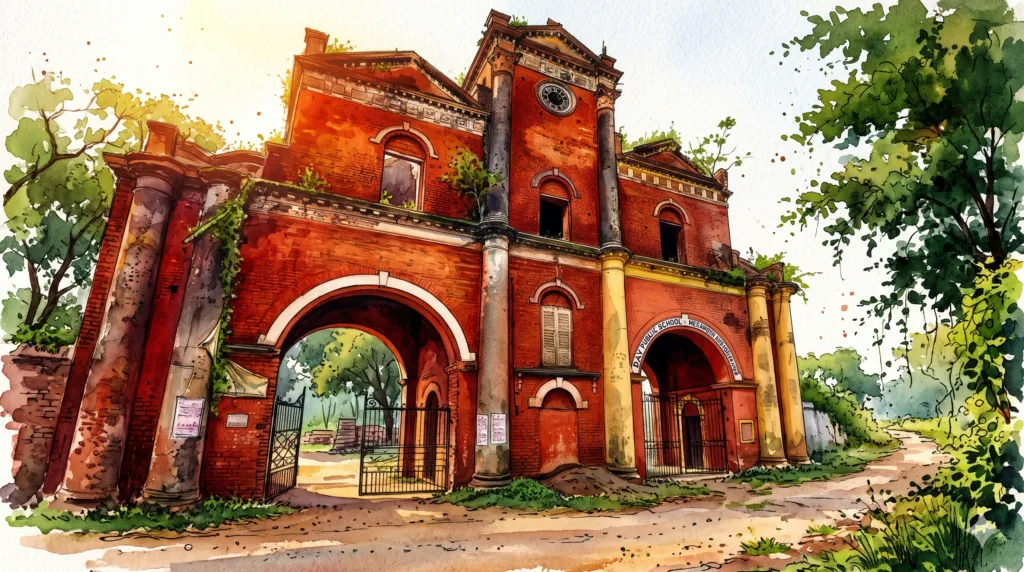
Tucked away in western Birbhum, Hetampur Rajbari stands as one of Bengal’s most magnificent aristocratic estates. Locally called Ranjan Palace, this neoclassical mansion is famous as the house of 999 doors. It sits in Hetampur village near Dubrajpur, roughly 38 kilometers west of Bolpur. For travelers visiting Santiniketan, it makes a rewarding offbeat day excursion.
First, its historical background reveals the immense stature of the Chakravarti zamindars. Radhanath Chakravarti founded the estate during the eighteenth century. Later, his grandson Bipracharan Chakravarti expanded their territories across Birbhum, Burdwan, and parts of modern Jharkhand. In 1862, an eleven-year-old Ram Ranjan Chakravarti inherited the estate following the demise of his father, Krishna Chandra.
Hetampur Rajbari: Key Facts & Visitor Summary
| Feature | Details |
|---|---|
| Official Name | Ranjan Palace (Hetampur Rajbari) |
| Location | Hetampur Village (near Dubrajpur), Birbhum District, West Bengal |
| Year of Construction | 1905 |
| Built By | Maharaja Ram Ranjan Chakravarti Bahadur |
| Architectural Style | European Neoclassical with Gothic gateway and clock tower |
| Famous For | 999 doors and windows (known as Birbhum’s Hazarduari) |
| Adjacent Landmark | Chandranath Shiva Temple (1847 octagonal terracotta temple) |
| Distance from Santiniketan | Approx. 38 km (about 55 to 65 minutes by road via Illambazar) |
The Inspiring History of Maharaja Ram Ranjan Chakravarti
The rise of Hetampur as an administrative powerhouse is closely tied to Maharaja Ram Ranjan Chakravarti. Historian and civil servant Sir William Wilson Hunter noticed the young boy’s potential in the 1860s. Consequently, authorities arranged for him to receive a rigorous classical education in Varanasi.
When the devastating Bengal famine struck in 1874, the young ruler displayed extraordinary benevolence. He spent fourteen thousand rupees of his personal wealth on famine relief. In addition, he opened free kitchens for four months and waived over thirty thousand rupees in agricultural taxes. In recognition of his charity, the British administration conferred upon him the title of Raja in 1875, Bahadur in 1877, and Maharaja in 1912.
In 1905, Maharaja Ram Ranjan constructed this lavish residence, christening it Ranjan Palace. Earlier in 1897, his wife Maharani Padma Sundari Debi established Krishna Chandra College on the estate grounds. She dedicated valuable revenue-yielding land to fund the college, creating one of the earliest higher-education institutions in rural Bengal.
Architecture: The 999-Door Palace and Gothic Arch
Hetampur Rajbari showcases an arresting blend of European neoclassical architecture and colonial engineering:
- The Gothic Gateway: A stately entrance arch topped with a vintage clock greets visitors as they enter from the village road.
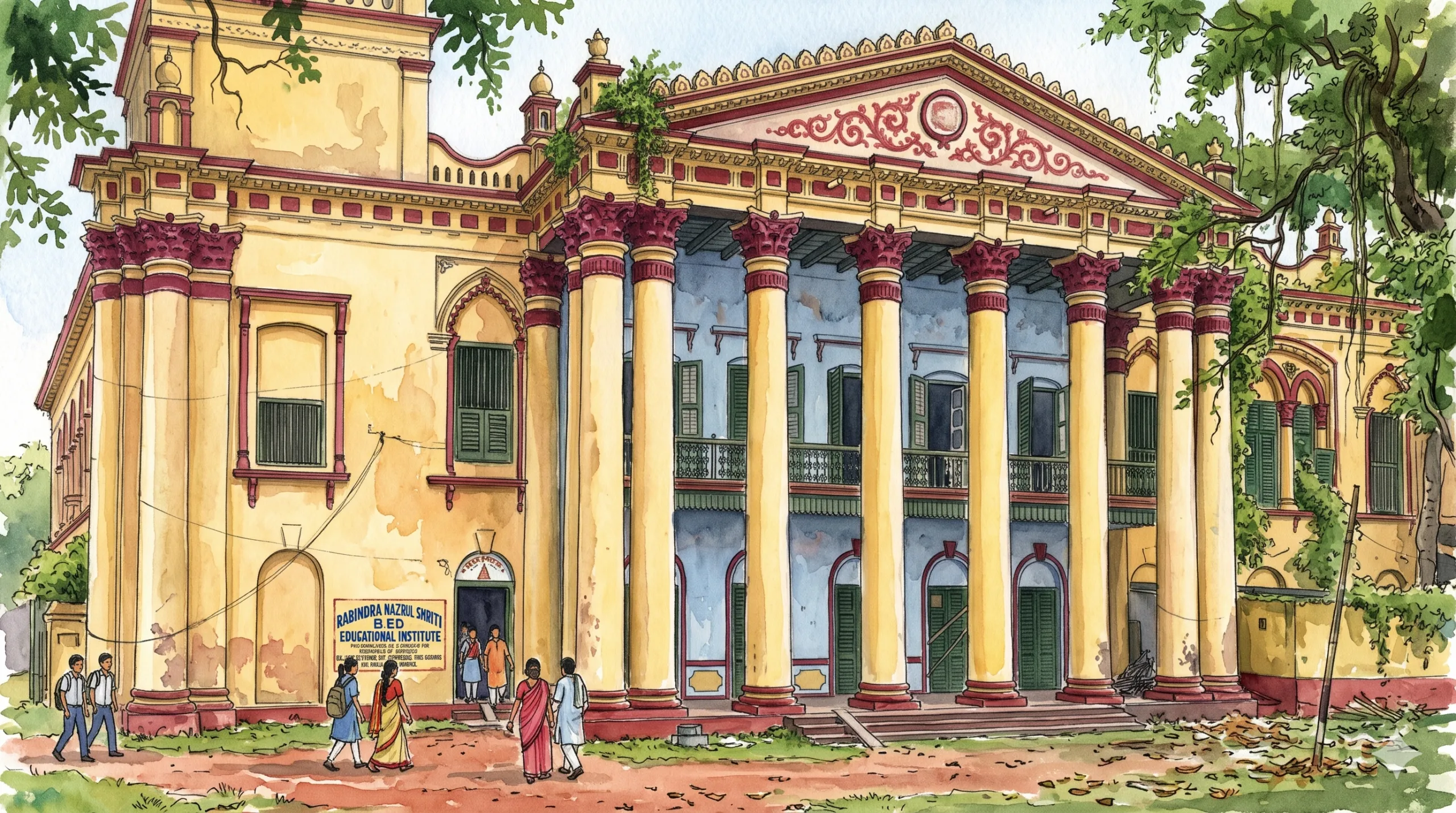
- The 999 Doors & Windows: The sprawling two-storied mansion features 999 louvered French doors and tall windows. This intricate arrangement allows continuous cross-ventilation during hot summer afternoons.
- Colonnaded Verandas: Deep porticos supported by Corinthian pilasters wrap around the central living quarters.
- Current Use: Today, parts of the palace grounds accommodate local educational institutions, while the regal exterior preserves the memory of zamindari opulence.

Must-See Nearby: The Octagonal Chandranath Shiva Temple
Just two minutes from the main palace stands the exquisite Chandranath Shiva Temple. Built in 1847 by Raja Krishna Chandra Chakravarti (father of Ram Ranjan), this octagonal brick shrine is a masterpiece of Bengal terracotta art:
- Intricate Terracotta Reliefs: Thousands of clay plaques cover the outer walls, depicting episodes from the Ramayana, the Mahabharata, and Krishna-lila.
- Colonial Portraiture: Uniquely, local terracotta artisans carved miniature portraits of contemporary British figures alongside Hindu gods. You can spot reliefs depicting Queen Victoria, European soldiers, and horse-drawn carriages.
- Dewanji Temple & Rasmancha: A short walk further into the village leads to other 18th-century shrines and an ornamental Rasmancha built by the estate’s ministers.
How to Visit Hetampur Rajbari from Bolpur Santiniketan
A day trip to Hetampur Rajbari fits smoothly into your Santiniketan holiday itinerary:
- Travel Route: Take the Bolpur-Illambazar Road (NH 114) to Illambazar, then follow the road toward Dubrajpur. Turn off at the Hetampur crossing and drive two kilometers inside the village.
- Distance & Travel Time: The total distance is approximately 38 km from Bolpur Railway Station, taking roughly 1 hour by car or hired taxi.
- Ideal Half-Day Circuit: Combine Hetampur Rajbari with a visit to the volcanic boulder formations of Mama Bhagne Pahar in Dubrajpur, or the sacred hot springs of Bakreswar (18 km away). Explore other regional routes in our Bolpur Santiniketan sightseeing guide.
- Travel Logistics: Book your base stay through our Santiniketan accommodations guide, taste authentic food at local restaurants, and withdraw pocket cash from our bank and ATM directory before heading toward Dubrajpur.