
Located just 5.5 km southwest of Bolpur town and adjacent to Sriniketan, the historic village of Surul is home to the aristocratic Surul Rajbari (popularly known as Sarkar Bari). Established in the mid-18th century by Srinivas Sarkar, this sprawling Zamindari estate stands as a living testament to Birbhum’s pre-colonial and colonial trading prosperity. With its 250-year-old traditional Bonedi Durga Puja, sprawling courtyards, and neighboring high-relief terracotta temples, Surul Rajbari offers a deep, evocative journey into Bengal’s feudal architectural heritage.
Surul Rajbari: Key Details at a Glance
| Feature | Details |
|---|---|
| Location | Surul Village, adjacent to Sriniketan, Bolpur, Birbhum District, West Bengal 731236 |
| Founded By | Srinivas Sarkar (flourished during mid-18th century, circa 1750s) |
| Key Architectural Highlights | Boro Taraf mansion, Choto Taraf courtyard, open pillared Natmandir, Thakur Dalan, and 19th-century terracotta temples |
| Famous Annual Event | 250+ Year Old Bonedi Durga Puja (Celebrated with traditional rituals from Sasthi to Dashami) |
| Distance from Bolpur Station | Approx. 5.5 km (about 15–20 minutes via Sriniketan Road) |
| Distance from Santiniketan Ashram | Approx. 4.5 km (about 12–15 minutes by toto) |
| Entry Fee | Free (Heritage residential property; outside view and courtyard access) |
| Best Time to Visit | October through March (and during Autumn Durga Puja festival days) |
The Legacy & Origins of Sarkar Zamindar Bari
The Sarkar family (originally bearing the surname Ghosh) rose to prominence under Srinivas Sarkar during the 1750s. Benefiting from Surul’s strategic location along trade waterways and arterial overland routes, Srinivas Sarkar built a flourishing commercial enterprise supplying ship sails, textiles, and merchandise to the British East India Company, which had established a major commercial residency in Surul under John Cheap (popularly remembered as “Cheap Saheb”).
As their prosperity grew, the family established extensive landholdings across Birbhum, built ornate family mansions (later divided into Boro Taraf and Choto Taraf), excavated community ponds, and commissioned skilled temple artisans (Sutradhars) to erect exquisite terracotta shrines dedicated to Shiva and Lakshmi-Janardan.
What to See at Surul Rajbari Complex
1. The Grand Mansions & Thakur Dalan
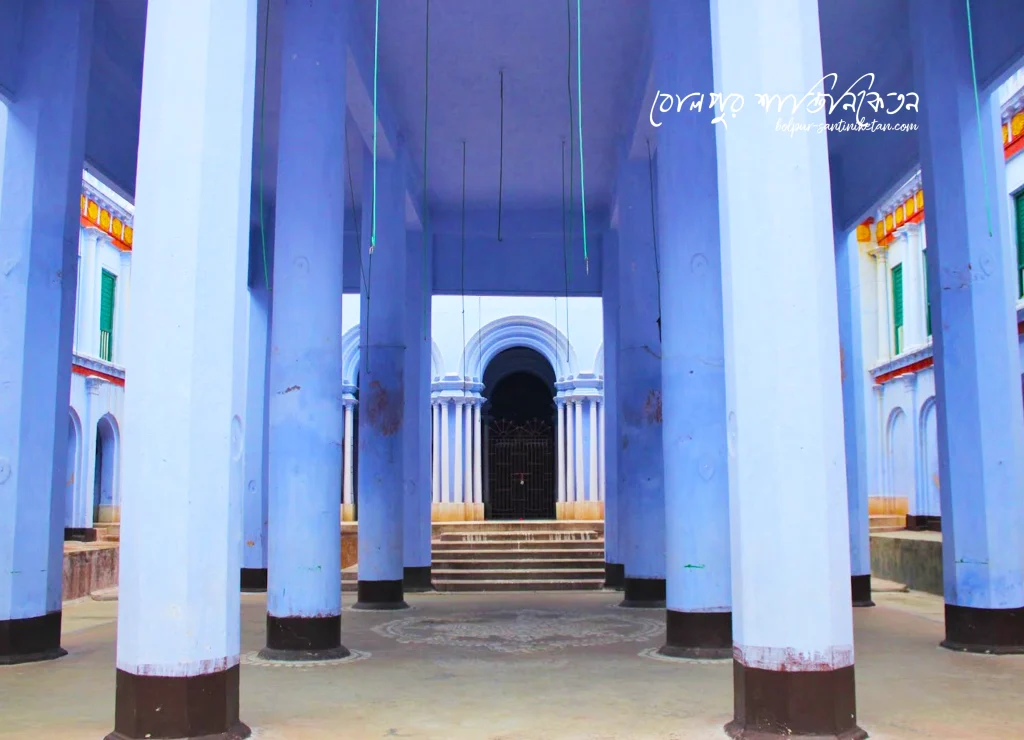
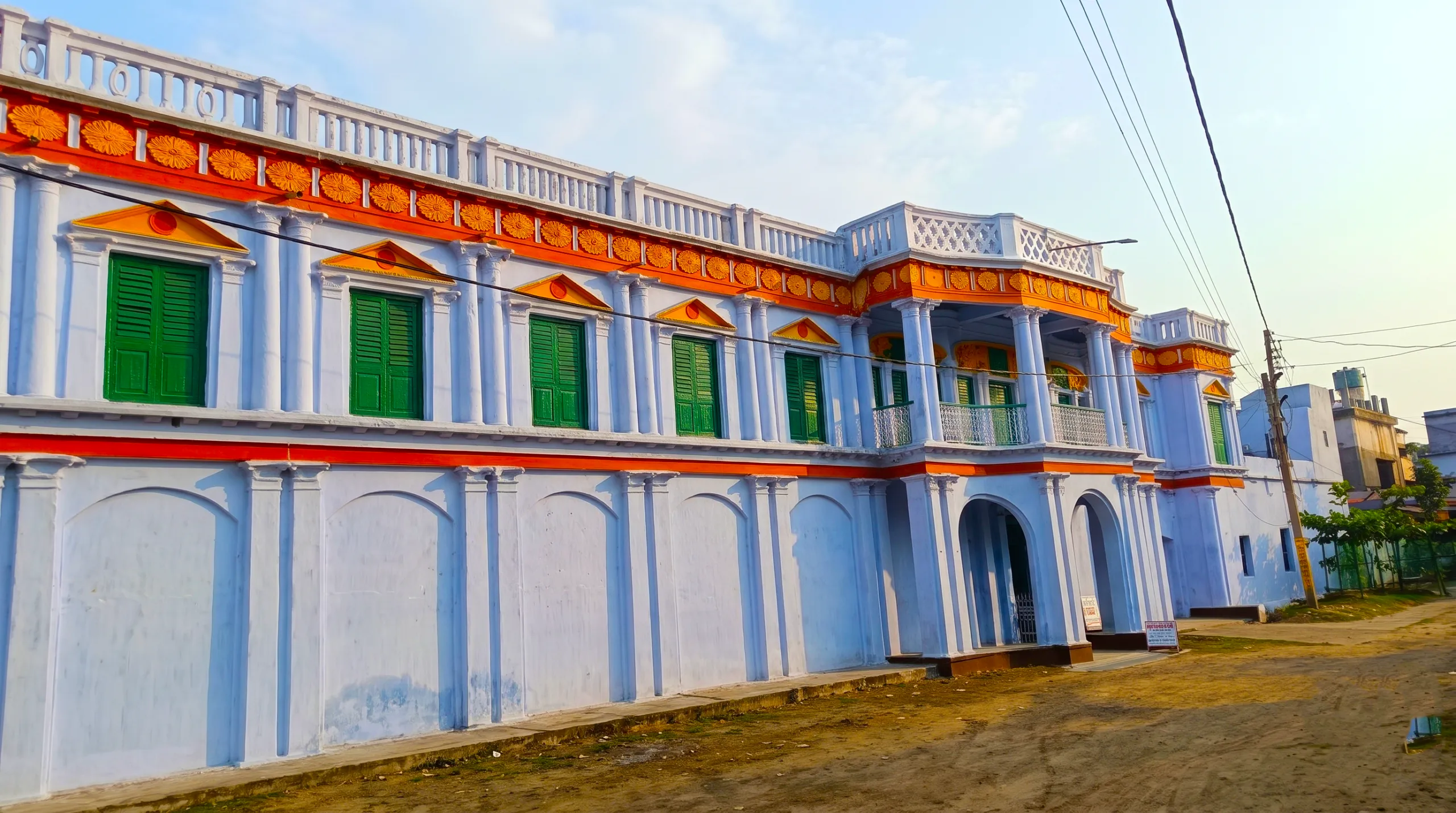
The main residential quarters feature traditional Bengali Zamindari architecture with stucco colonnades, arched verandas, and heavy wooden shutters. The centerpiece of the estate is the Thakur Dalan—a vast pillared sanctum facing a grand open central courtyard where religious assemblies, seasonal fairs, and traditional family rituals have taken place for generations.
2. The Exquisite Terracotta Temples of Surul
Surul is widely renowned across architectural circles for its exceptionally preserved terracotta shrines situated just outside the Rajbari gates:
- Pancha-Ratna Lakshmi Janardan Temple (Built c. 1830s): Dedicated to the family deity, this five-pinnacled temple displays deeply carved terracotta panels depicting scenes from the Ramayana, Krishna Leela, the battle of Lanka, royal processions, and European traders in 19th-century colonial attire.
- Twin Aatchala Shiva Temples: Situated facing each other across the village approach, adorned with intricate floral medallions and Shaivite mythological panels.
3. The 250-Year-Old Bonedi Durga Puja
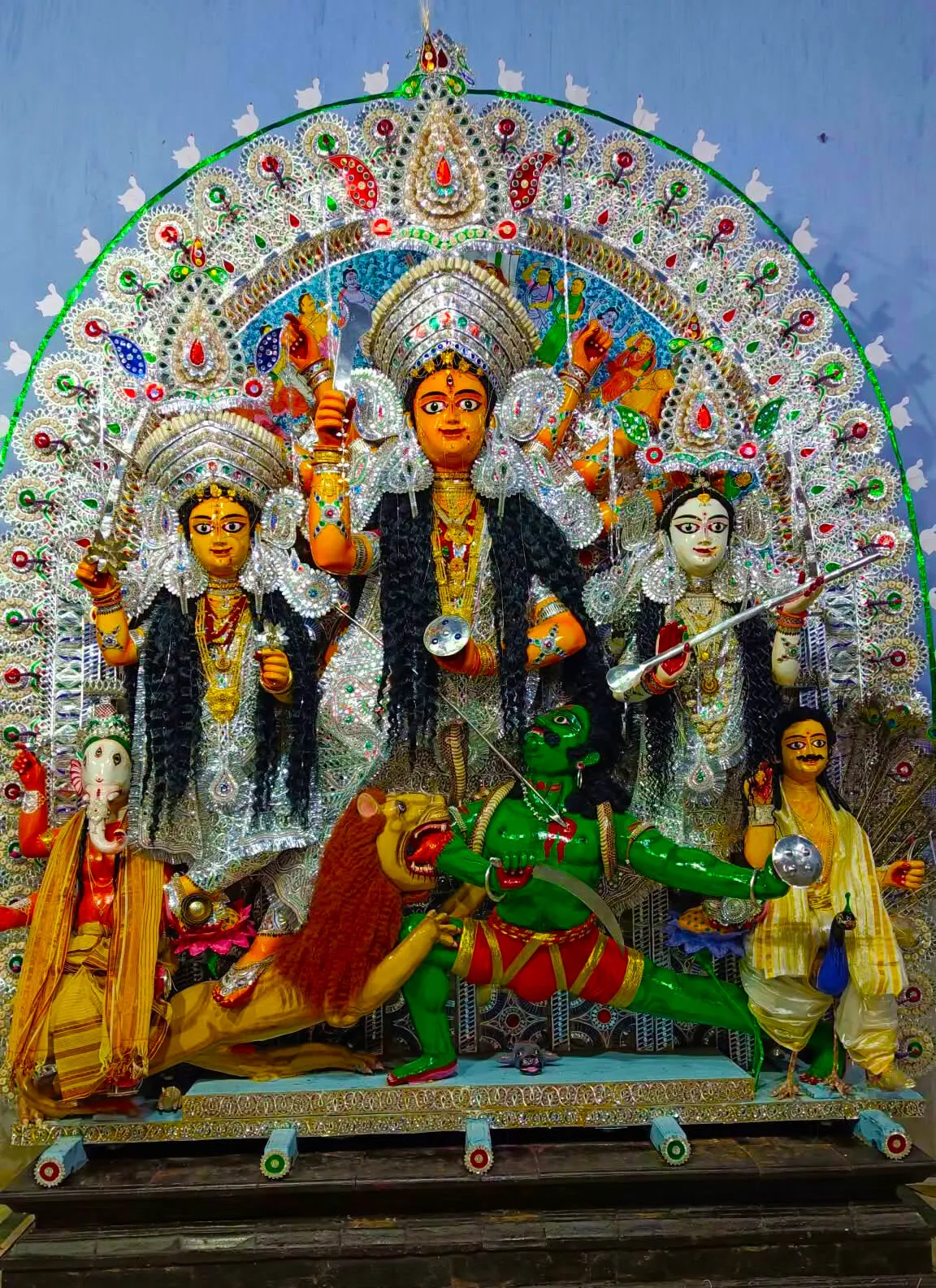
During the autumn festival of Durga Puja (Mahasasthi to Vijayadashami), Surul Rajbari becomes one of the most culturally vibrant centers in Birbhum. Unlike modern community pandals, the Puja here strictly adheres to centuries-old Vaishnava and Shakta household rituals, accompanied by the beating of traditional dhaks, lighting of brass chandeliers, and the gathering of family descendants from across the world. The Thakur Dalan remains openly accessible to respectful visitors during the Puja days.
How to Reach Surul Rajbari
- From Bolpur Shantiniketan Railway Station (~5.5 km): Reserved totos (e-rickshaws) take about 15 to 20 minutes along the Bolpur–Sriniketan road, usually costing ₹100–₹130.
- From Santiniketan Ashram / Visva-Bharati Central Campus (~4.5 km): A quick 12- to 15-minute toto ride straight past Sriniketan junction brings you to the Surul Rajbari gate.
- From Prantik Railway Station (~7 km): Totos take around 20 to 25 minutes via the Santiniketan bypass road.
Visitor Etiquette & Practical Tips
- Respect Private Residential Spaces: Because descendants of the Sarkar family still reside in portions of the estate, visitors are requested to view the exterior facades, temple exteriors, and open courtyards without entering private residential quarters unless explicitly invited.
- Temple Photography: The terracotta temple facades can be photographed freely in natural light. Early mornings and late afternoons provide soft sunlight that highlights the fine reliefs on the clay panels.
- Combine with Sriniketan Tour: Surul is located within 2 km of Sriniketan’s rural craft and agricultural centers (Silpa Sadana), making it an easy addition to a half-day southern Bolpur sightseeing itinerary.
Frequently Asked Questions About Surul Rajbari
Where is Surul Rajbari located?
Surul Rajbari is situated in Surul village, just 5.5 km southwest of Bolpur Railway Station and about 4.5 km from Santiniketan Ashram, near Sriniketan in Birbhum district, West Bengal.
Is there an entry fee to visit Surul Rajbari?
No. There is no entry fee or ticket required to view Surul Rajbari, its open courtyards, or the neighboring terracotta temples.
Can tourists visit Surul Rajbari during Durga Puja?
Yes. The grand Thakur Dalan of Surul Rajbari is open to the public throughout the Durga Puja festival days (from Sasthi to Dashami), welcoming visitors to witness their 250-year-old traditional Bonedi puja rituals.
What are the terracotta temples near Surul Rajbari?
The village features several 19th-century terracotta shrines commissioned by the Sarkar family, notably the Pancha-Ratna Lakshmi Janardan Temple (famous for its intricate Ramayana and European colonial terracotta panels) and twin Shiva temples.
How much is the toto fare from Bolpur station to Surul Rajbari?
A reserved toto (e-rickshaw) from Bolpur Shantiniketan Railway Station typically charges ₹100 to ₹130 for a one-way trip, taking around 15 to 20 minutes.
tags Bolpur Heritage Bonedi Bari Durga Puja Lakshmi Janardan Temple Pancha Ratna Temple Surul Places of Interest Bolpur Santiniketan Sightseeing Sriniketan Sightseeing Srinivas Sarkar Surul Durga Puja Surul Rajbari Surul Rajbari Bolpur Surul Sarkar Bari Terracotta Temples of Birbhum