
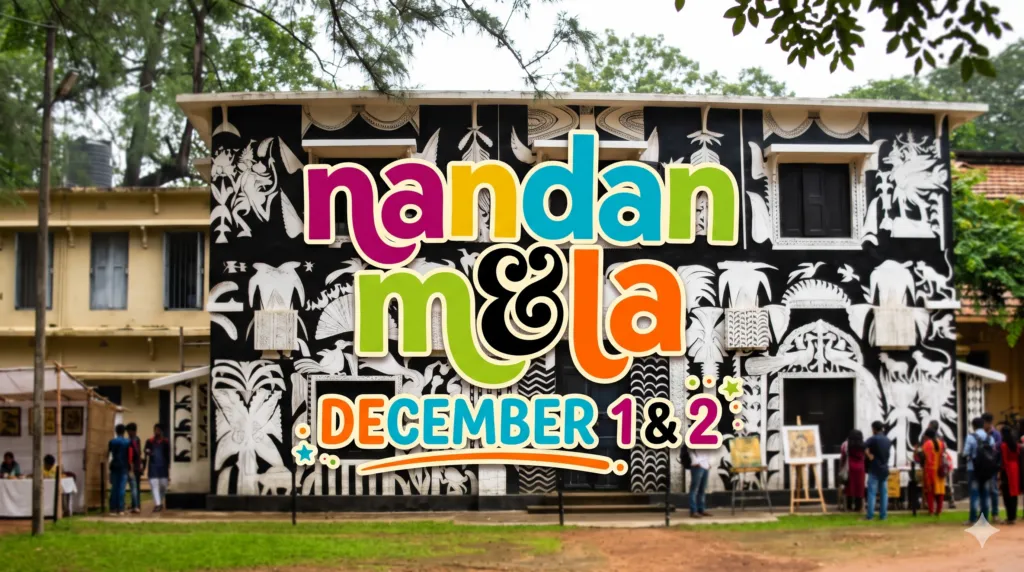
Every December, just as the morning chill softens into golden winter sunlight, Nandan Mela Santiniketan quietly transforms the red-soil lanes of Kala Bhavana into a living canvas. Unlike loud commercial fairs with neon banners and blaring speakers, this two-day gathering feels like stepping inside an artist’s sketchbook. Here, beneath ancient sal and mango trees in Santiniketan, art breathes freely in the open air.
First, imagine walking past Ramkinkar Baij’s monumental concrete sculptures as early morning mist lifts off the grass. Around you, young art students lay out hand-thrown terracotta cups, freshly inked woodcut prints, and delicate batik scarves on woven mats. Below, step into the story of what those two unforgettable days—December 1 and 2—truly feel like.

Morning Light on Red Soil: Where Every Stall Tells a Story
When you enter the Santiniketan UNESCO World Heritage campus on the morning of December 1, the air smells of damp earth, woodsmoke, and fresh clay. Every corner of Kala Bhavana hums with quiet excitement:
- Conversations Instead of Price Tags: First, you do not merely buy an artwork at Nandan Mela Santiniketan; you meet the hands that shaped it. A sculpture student explains how she glazed a tiny ceramic tea bowl, while a printmaker shows you the carved wooden block behind his linocut.
- Art Within Everyone’s Reach: Second, Nandalal Bose dreamed of bringing fine art out of elite galleries and into everyday homes. Consequently, a watercolor sketch, a hand-painted bookmark, or a terracotta chime costs no more than a simple lunch.
- A Legacy of Quiet Kindness: Above all, every rupee you spend flows directly into the student welfare fund. Thus, collecting a piece of art becomes an act of fellowship that helps young artists continue their studies.
Afternoon Flavors, Batik Scarves & Painted Notebooks
By noon, the winter sun warms the courtyard outside the iconic mud-walled Kalo Bari (Black House). Visitors wander slowly from the painting department to the ceramic kilns, carrying brown paper parcels tied with jute string:
- Treasures Worth Carrying Home: First, pause at the textile stalls where soft cotton sarees and dupattas carry earthy wax-resist batik patterns. Nearby, stacks of handmade paper notebooks and hand-lettered calendars wait for writers and dreamers.
- A Taste of Campus Warmth: Next, follow the aroma of freshly fried snacks and spiced tea drifting from student-run food corners. Sitting on a low brick wall with a warm clay cup of tea, you watch children sketch alongside senior professors.
Twilight Under the Stars: When Music Fills the Courtyard
As December afternoon fades into crisp dusk, Nandan Mela Santiniketan reveals its most magical hour. String lights flicker across tree branches, and the rush of daytime browsing slows into stillness:
- Songs Without a Stage: First, students gather in a circle on the grass with esraj, dotara, and tabla. Soon, melodies of Rabindra Sangeet and rustic Baul tunes drift across the campus breeze, echoed softly by listeners sitting under the stars.
- A Memory That Lingers: Finally, when you walk back toward Bolpur under a clear winter sky, your hands carry fragile pottery and rolled-up paintings—yet your heart carries something far lighter.
Planning to Witness the Next Nandan Mela?
If this story calls you toward Birbhum’s red earth every December 1 and 2, prepare your weekend gently:
- Explore the Full Festival Guide: First, read our Nandan Mela event guide for festival background and campus traditions.
- Walk the Historic Campus: Next, pair your visit with the guided Santiniketan Heritage Walk or browse Saturday crafts at Sonajhuri Haat.
- Plan Your Stay & Journey: Finally, check train arrivals in our Bolpur Santiniketan train time table and book a peaceful retreat through our Where to Stay directory.
Stay and travel deals near Bolpur Santiniketan
This page contains affiliate links. If you book through them we may earn a small commission at no extra cost to you.tags Bolpur Santiniketan Blogs Kala Bhavana Art Fair Nandalal Bose Nandan Mela Santiniketan Santiniketan Travel Story Visva Bharati Culture Winter in Santiniketan