
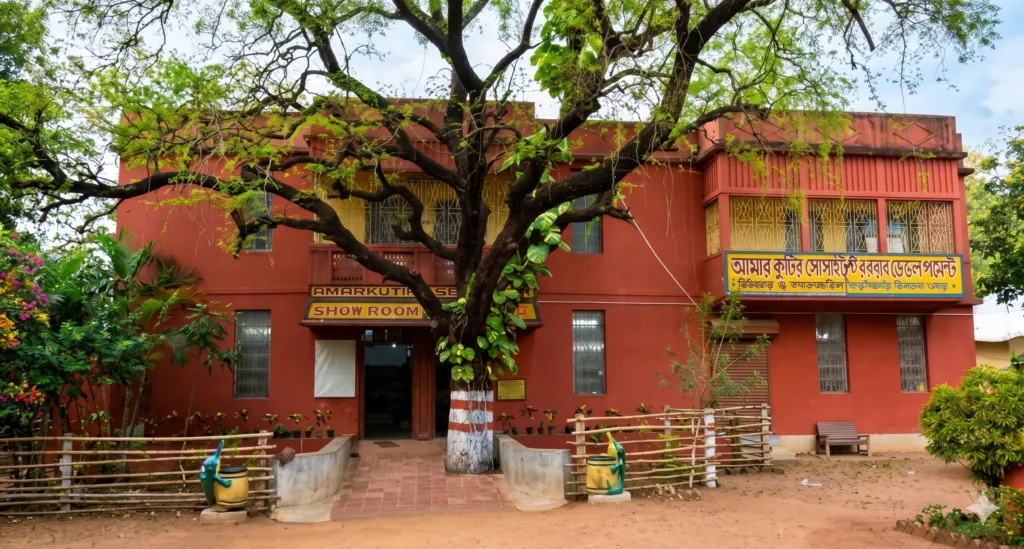
Located on the tranquil banks of the Kopai River just 4.5 km from the central ashram area, Amar Kuthir Santiniketan is one of the most culturally significant handicraft societies in West Bengal. Established in the 1920s as a clandestine sanctuary for Indian independence activists, it subsequently transformed into a pioneering cooperative society dedicated to empowering rural women through authentic village crafts. Today, Amar Kuthir is a premier shopping destination for genuine Santiniketan embossed leather goods, Kantha embroidery, hand-dyed batik silk, and bamboo artifacts crafted directly by regional artisans.
Amar Kuthir Santiniketan: Key Details at a Glance
| Feature | Visitor Information |
|---|---|
| Location | Amar Kuthir Eco-Tourism Complex, Ballavpur, near Kopai River, Santiniketan, Birbhum, West Bengal 731236 |
| Founded By | Sushen Mukherjee (1922; reorganized as a cooperative in 1978) |
| Visiting Hours | 9:30 AM to 6:00 PM (Showroom and complex open daily) |
| Weekly Closed Day | Open all 7 days (Handloom workshop units may observe staggered lunch breaks) |
| Entry Fee | Free public entry to the complex, museum corner, and craft showrooms |
| Distance from Bolpur Station | Approx. 7.5 km (about 20–25 minutes by toto) |
| Distance from Santiniketan Ashram | Approx. 4.5 km (about 12–15 minutes by toto) |
| Distance from Sonajhuri Haat | Approx. 3.5 km via Ballavpur Danga road |
| Payment Modes | Cash, UPI (Google Pay, PhonePe, Paytm), and major Credit/Debit Cards |
The Historic Journey: From Revolutionary Refuge to Craft Cooperative
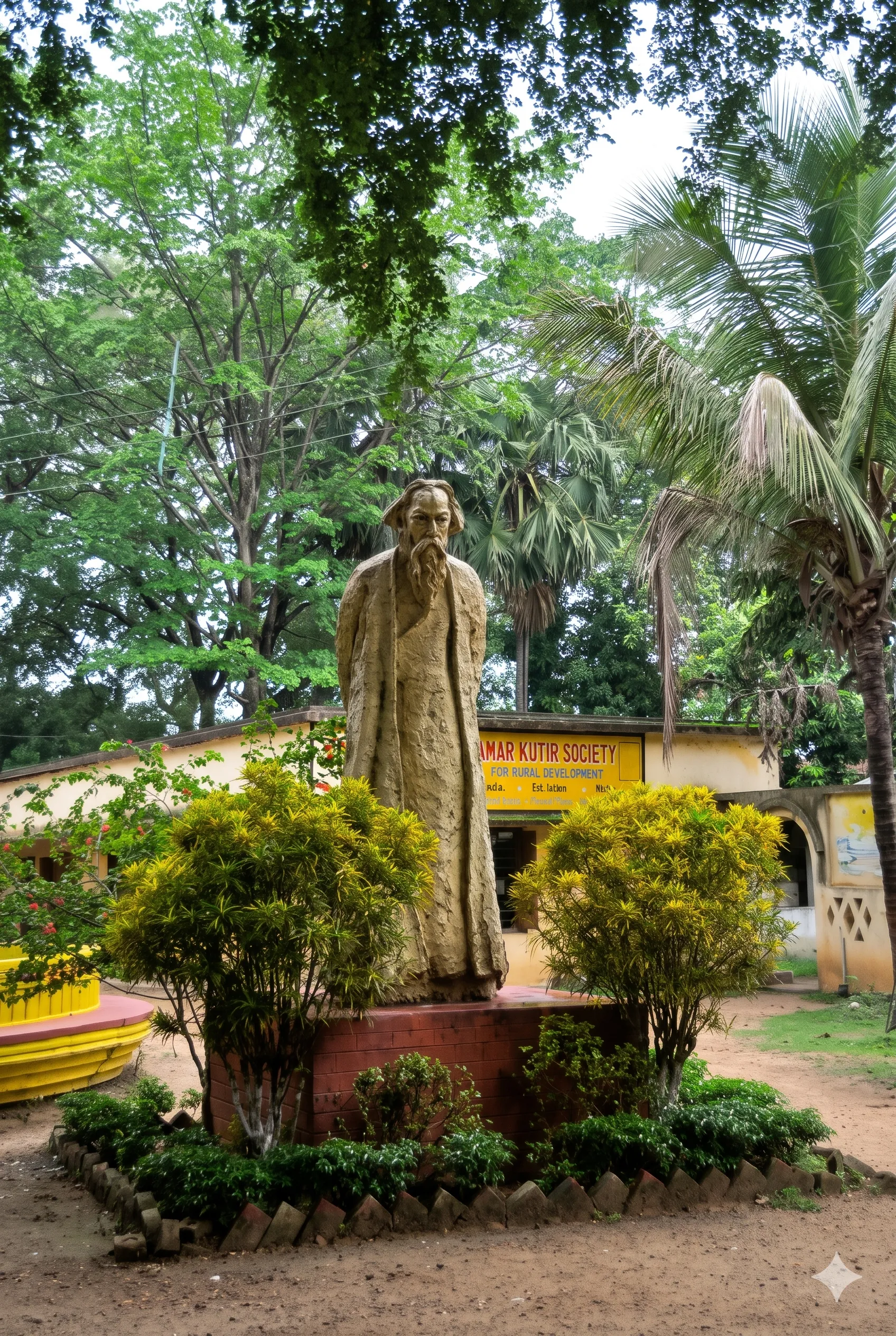 The origins of Amar Kuthir (“My Cottage”) reflect the intertwined paths of the Indian national freedom movement and Tagore’s rural reconstruction efforts. In 1922, young freedom activist Sushen Mukherjee, who was closely associated with revolutionary outfits fighting British colonial rule, established this retreat in the forested village of Ballavpur beside the Kopai River.
During the 1920s and 1930s, Amar Kuthir operated as an underground shelter for political revolutionaries fleeing British warrants. Sushen Mukherjee received enthusiastic moral encouragement from Rabindranath Tagore, who had begun developing the Sriniketan rural reconstruction institute nearby. Following Indian independence and Sushen Mukherjee’s demise, the institution was reorganized in 1978 into the Amar Kuthir Society for Rural Development.
Today, this non-profit cooperative provides steady, dignified employment to hundreds of rural women and traditional artisans from surrounding villages across Birbhum, keeping indigenous craft techniques alive while paying equitable fair-trade wages.
What to Buy at Amar Kuthir: Signature Handicrafts
- Embossed Santiniketan Leather Craft: World-renowned vegetable-tanned sheepskin and goat-hide bags, clutches, coin purses, wallets, and footstools. Each piece features traditional geometric or floral motifs etched through heated metal blocks and hand-dyed with vegetable pigments.
- Hand-Stitched Kantha Embroidery: Authentic silk and tussar sarees, stoles, kurtis, and bedspreads hand-embroidered by local village women using the traditional running-stitch technique that takes weeks or months per garment.
- Batik Handloom Textiles: Wax-resist hand-dyed cotton and pure Bishnupuri silk dress fabrics, scarves, and table runners showcasing earthy hues and intricate crackle patterns.
- Terracotta & Dokra Metalwork: Lost-wax bell-metal figurines, tribal wall plaques, folk jewelry, and fired-clay pottery produced by tribal communities around Birbhum.
- Bamboo & Grass Crafts: Eco-friendly floor mats, picnic baskets, hand fans, and decorative storage containers hand-woven from wild date-palm leaves and local wild grasses.
How to Reach Amar Kuthir Santiniketan
- From Bolpur Shantiniketan Railway Station (~7.5 km): A reserved e-rickshaw (toto) takes approximately 20 to 25 minutes, usually costing ₹120 to ₹150 for a one-way trip.
- From Santiniketan Ashram / Uttarayana Complex (~4.5 km): A 12- to 15-minute ride through the picturesque Sriniketan–Ballavpur country road.
- From Prantik Railway Station (~5.5 km): A 15-minute scenic toto drive crossing the canal road and Ballavpur forest edge.
- Shared Route Idea: Amar Kuthir is situated just 3.5 km past Sonajhuri Forest and Ballavpur Wildlife Sanctuary (Deer Park). Combine all three stops into a single half-day morning or afternoon excursion.
Tips for Visiting Amar Kuthir
- Guaranteed Authenticity: Unlike commercial souvenir vendors in tourist markets, products sold inside the official Amar Kuthir Society showroom are certified authentic, handmade, and sold at regulated cooperative prices.
- Visit the Workshops: On working weekdays, visitors can walk around designated workshop corridors to watch local women sketching Kantha patterns on cloth and craftsmen embossing intricate designs onto treated leather.
- Pair with a Sunset by the Kopai River: The peaceful bank of the Kopai River is within short walking distance. Time your shopping for mid-afternoon, then stroll to the riverside embankment before sunset.
Frequently Asked Questions About Amar Kuthir
What are the opening and closing timings of Amar Kuthir?
The Amar Kuthir craft showroom and cooperative complex are open daily from 9:30 AM to 6:00 PM throughout the week, including Sundays.
Is there an entry fee to visit Amar Kuthir?
No. Entry to the Amar Kuthir grounds, artisan demonstration areas, and the craft showroom is completely free for all tourists.
What is Amar Kuthir famous for?
Amar Kuthir is celebrated for authentic Santiniketan embossed leather bags, handmade Kantha-stitch silk sarees, batik textiles, bamboo crafts, and its historic heritage as an Indian freedom struggle revolutionary shelter.
How far is Amar Kuthir from Bolpur Station and Santiniketan Ashram?
Amar Kuthir is approximately 7.5 km from Bolpur Shantiniketan Railway Station (a 20-minute toto ride) and about 4.5 km from the central Santiniketan Ashram area.
Are cards and digital payments accepted at Amar Kuthir?
Yes. The official sales counter accepts all major UPI apps (Google Pay, PhonePe, Paytm), credit cards, debit cards, and cash.