
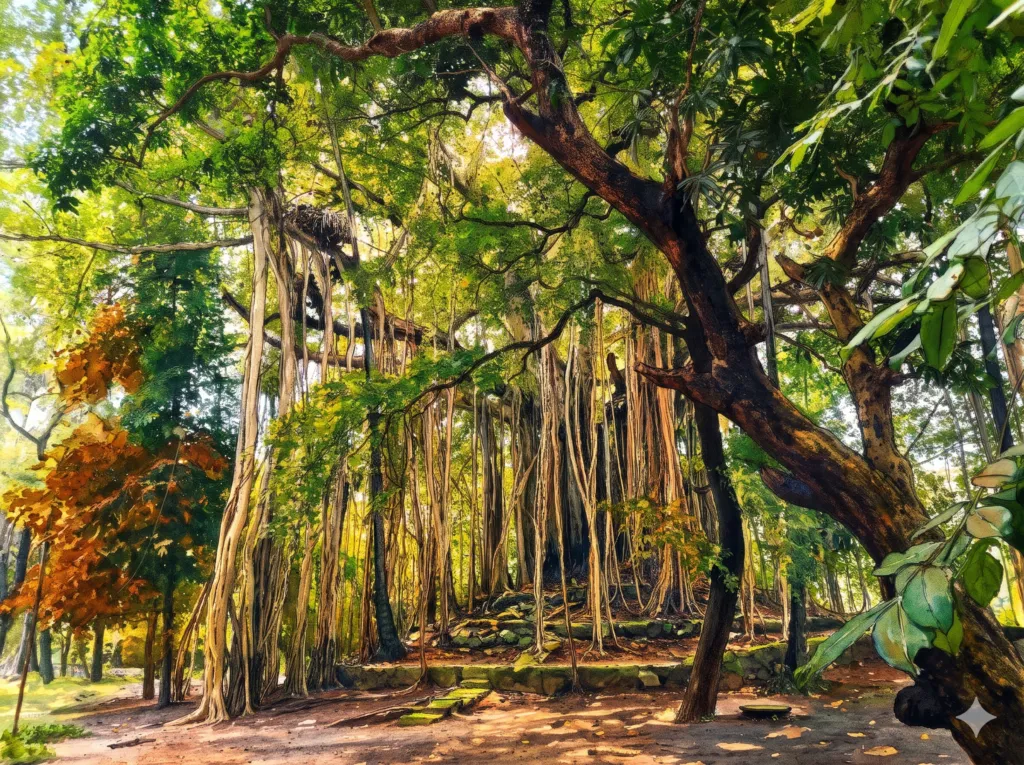
Within the shaded ashram groves, Tin Pahar Santiniketan holds a special place in open-air educational history. The Bengali name translates directly to “Three Hills.” These three earthen mounds are not true mountains. Instead, they symbolize Rabindranath Tagore’s belief that children learn best in living nature.
First, the origin of these mounds dates back to the formative years of the Brahmacharya Asrama. Workers excavated red soil while digging the ashram pond. Rather than throwing the earth away, teachers and students shaped it into three playful hillocks. Over time, leafy trees and wild grass covered the mounds, turning them into an inviting outdoor amphitheater.
Consequently, Tin Pahar became a beloved gathering space for young Patha Bhavana pupils. Teachers gathered students atop these gentle mounds for morning storytelling, poetry recitals, and nature discussions. Even today, the grassy slopes evoke early memories of ashram life before classroom walls existed. Explore the history, educational philosophy, and visitor guidelines for this peaceful spot below.
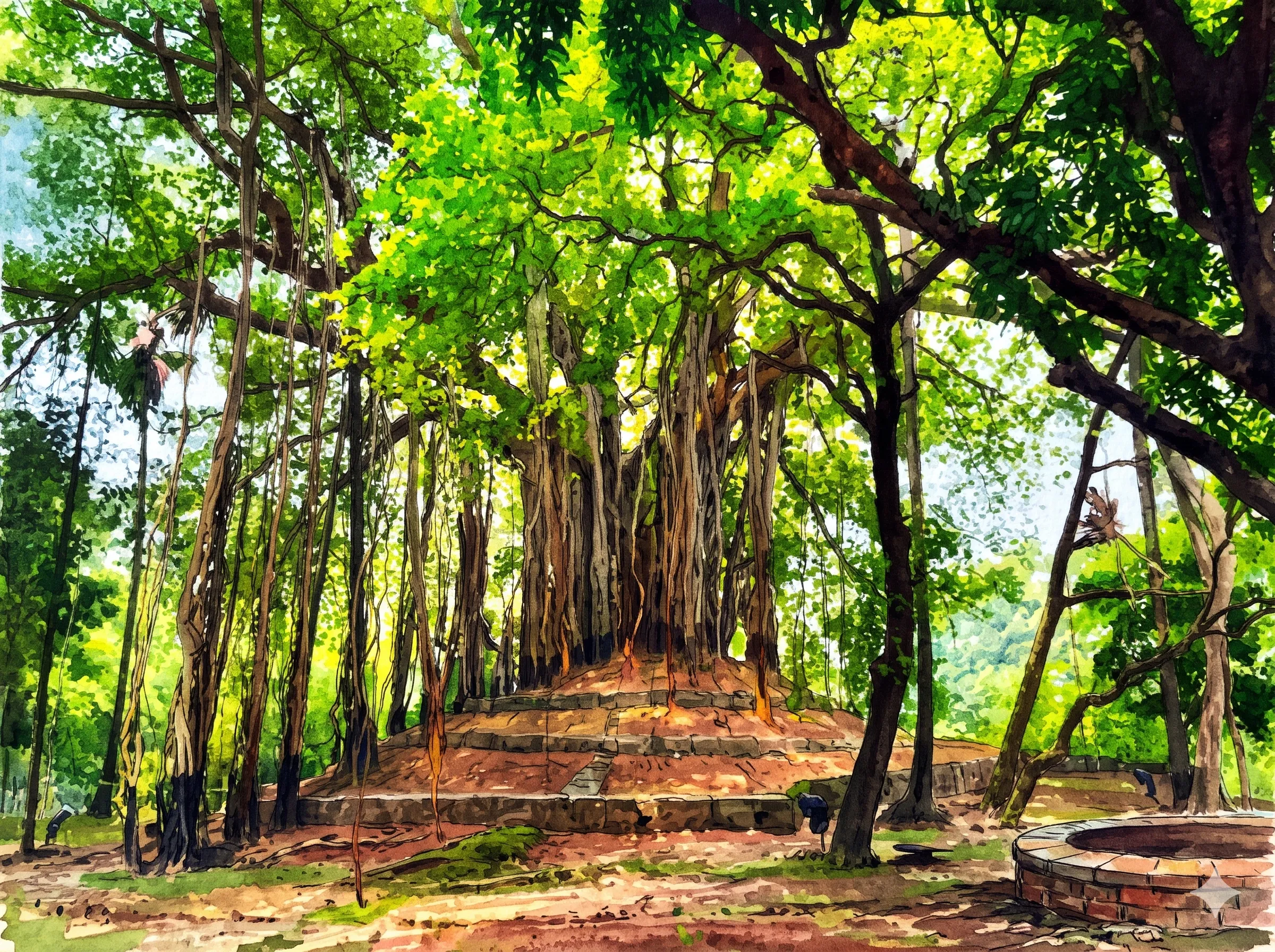
Tin Pahar Santiniketan: Key Facts & History
| Feature | Details |
|---|---|
| Location | Core Ashram Precinct, Patha Bhavana Campus, Visva-Bharati, Santiniketan |
| Name Meaning | “Three Hills” or “Three Mounds” in Bengali |
| Origin | Created from excavated soil during the construction of the Ashram pond |
| Primary Purpose | Outdoor open-air classrooms, student storytelling, and nature observation |
| Surrounding Flora | Ancient sal, neem, amlaki, and banyan trees |
| Visitor Access | Exterior viewing via the official Santiniketan Heritage Walk |
| Weekly Closure | Every Thursday (Visva-Bharati weekly holiday) |
| Distance from Bolpur Station | Approx. 2.5 km (about 8 to 10 minutes by toto) |
Tagore’s Vision: Learning Without Classroom Walls
Rabindranath Tagore believed that conventional four-walled classrooms stifle curiosity. Therefore, he turned the natural landscape of Santiniketan into an interactive outdoor school:
- Playful Learning: First, the elevated mounds of Tin Pahar gave children a sense of adventure. Climbing the small hillocks brought joy to young students arriving from crowded cities.
- Natural Shade: Second, teachers conducted classes under the shade of neem and sal branches. Children sat comfortably on simple cane mats spread over the red earth.
- Firsthand Nature Study: Finally, the setting encouraged children to observe changing seasons, bird calls, and leaf buds firsthand. This direct connection with nature shaped Tagore’s philosophy of universal learning.
Artists and Thinkers at Tin Pahar
Throughout the decades, many distinguished thinkers and artists spent reflective moments around Tin Pahar. Visiting scholars from India and abroad admired how naturally school life blended with the outdoors. In addition, Kala Bhavana art teachers brought students here to sketch trees and study outdoor natural light.
The quiet surroundings inspired numerous poems, paintings, and songs celebrating the red earth of Birbhum. Even today, the rustling leaves and birdsong around Tin Pahar remind visitors of an era when education nurtured both intellect and spirit.
Visiting Guidelines & Nearby Ashram Circuit
Because Tin Pahar stands inside the protected UNESCO campus, you can view it during the official Santiniketan Heritage Walk. Guided tours take visitors past this historic outdoor classroom while sharing stories of Tagore’s teaching methods.
While exploring the ashram paths, you can easily walk over to nearby landmarks like Singha Sadana and Gour Prangana. You can also explore foundational ashram homes in our guide to historical houses of Santiniketan.
When planning an overnight trip, browse verified stays in our Santiniketan accommodations guide and enjoy traditional meals at local restaurants. In addition, locate cash counters using our bank and ATM directory before heading toward the Saturday village markets.